AFP Member Spotlight: Dashawn Austin


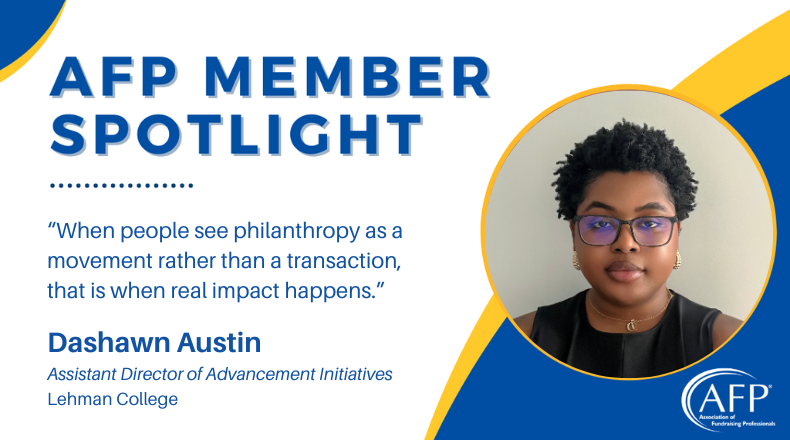


AFP Member Spotlights are a recurring series of interviews with AFP members, highlighting the unique individuals and career paths that exist within the fundraising profession. If you know an inspiring fundraising professional who deserves to be featured, please email [email protected].
In this member spotlight, we interviewed Dashawn Austin, assistant director of advancement initiatives at Lehman College. She shared with us her journey from higher education into philanthropy, her commitment to nurturing meaningful relationships, and her passion for using creativity and innovation to strengthen alumni engagement and build a culture of giving.
Q: How did you start your career in the fundraising profession and what led you there?
A: I like to say I fell into fundraising through the gateway of higher education. My career began in roles focused on marketing, communications, and student success, which taught me how to tell stories and build relationships. When I returned to New York City, I wanted to make a meaningful impact on students, faculty, and staff while strengthening a culture of philanthropy. Fundraising became the natural next step, allowing me to combine creativity, strategy, and innovation to support the mission of education and the community I care deeply about.
Q: When and why did you decide to become an AFP member?
A: When I joined Lehman College, I realized the importance of finding a community of professionals who share a passion for philanthropy. AFP offered that space, a network where I could learn, grow, and exchange ideas while bringing fresh and innovative approaches to my inaugural role. For me, membership was not just about professional development; it was about connecting with others who believe in the power of giving and using that collective energy to make a lasting impact.
Q: Are you doing anything innovative at your organization (or a past organization) that you think other fundraisers could benefit from?
A: I believe innovation depends on where an organization is and how far it is willing to go. When I stepped into Lehman College, it became clear that there was an opportunity to move the institutional advancement team forward digitally while enriching the alumni engagement experience and donor journey. Recognizing this, I have led the redesign of our website, launched our alumni Instagram, and introduced strategies to enhance the donor experience. These efforts have helped create a more connected and dynamic approach to engagement that others may find valuable.
Q: What is your favorite word? (only one word) How has this word influenced or inspired your career?
A: Nurture. Nurture is the word that defines how I approach my work and my aspirations. It speaks to creating growth, fostering creativity, and building spaces where people and ideas can thrive. As a Cancer, I am naturally drawn to empathy and care, and my Caribbean roots taught me the importance of community and shared responsibility. These values shape how I see philanthropy, not as a transaction but as a movement that requires intention and heart.
Working at the intersection of higher education and philanthropy, I use nurture as a guiding principle to design experiences that strengthen connections and create opportunities. Whether I am leading digital campaigns, building alumni engagement strategies, or exploring the arts through graduate studies, this word reminds me that every initiative should plant seeds that grow into something transformative. My goal is to nurture creativity, equity, and impact so that education and culture continue to flourish for generations to come.
Q: What professional accomplishment are you most proud of?
A: I am most proud of helping to unite advancement initiatives and alumni engagement to create meaningful momentum for Lehman College. Through collaboration and a shared commitment to the college’s mission, we launched Lehman’s first-ever Alumni Reunion event alongside Forever Forward: The Campaign for Lehman College. This was more than a celebration. It was a defining moment that strengthened community connections and elevated the culture of philanthropy at Lehman.
The energy and engagement generated through these efforts helped position Lehman College to receive a transformative 50 million dollar gift from MacKenzie Scott, the second gift awarded by her to our institution. Being part of this journey has been deeply rewarding because it reflects the impact of strategic innovation and the strength of Lehman’s vision for the future.
Q: How has being an AFP member and participating in the AFP affinity groups benefited you in your career?
A: Being an AFP member has been instrumental in shaping my growth as a fundraising professional. The mentorship program provided more than advice. It gave me a mentor whose guidance and perspective have strengthened my skills and boosted my confidence in navigating complex challenges.
Through AFP, I have also built connections with fundraisers across different organizations, gaining insights that have expanded my understanding of philanthropy and inspired innovative approaches in my work. These experiences have not only deepened my knowledge but have affirmed the importance of collaboration and community in advancing meaningful impact.
Q: In your opinion, what is the biggest challenge facing the nonprofit fundraising profession today?
A: I think one of the biggest challenges is that fundraising and philanthropy are not always understood for what they truly are. People often see fundraising as simply asking for money, when in reality it is about building relationships and connecting people to a mission they care about. Philanthropy is more than giving. It is a spirit of generosity and shared responsibility, and that understanding is not always present.
In my work at the intersection of higher education and philanthropy, I see how this lack of clarity can make it harder to create authentic engagement and a strong culture of giving. When people understand the purpose behind philanthropy, it becomes easier to inspire them to be part of something meaningful.
For me, the answer is storytelling and education. We have to show that fundraising is an invitation to create change together. When people see philanthropy as a movement rather than a transaction, that is when real impact happens.
Q: What advice do you have for other fundraising professionals?
A: Lead with authenticity. When you listen with empathy and speak with sincerity, you create trust. Trust is what inspires people to give. Fundraising is not about pressure. It is about inviting someone to be part of something meaningful.

Read More