AFP Member Spotlight: Maria E. Webb




AFP Member Spotlights are a recurring series of interviews with AFP members, highlighting the unique individuals and career paths that exist within the fundraising profession. If you know an inspiring fundraising professional who deserves to be featured, please email [email protected].
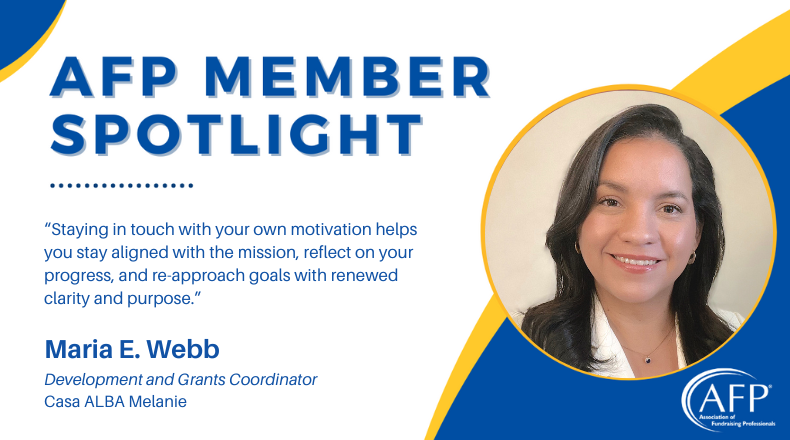
In this member spotlight, we interviewed Maria E. Webb, development and grants coordinator for Casa ALBA Melanie. Her career in fundraising began unexpectedly when a temporary role in stewardship sparked a passion for resource development. She shared with us a unique strategy called “power-mapping” and discussed the importance of collaboration, both within AFP, and her organization.
Q: How did you start your career in the fundraising profession, and what led you there?
A: My journey into fundraising began unexpectedly during my time as a capacity development director at a Philadelphia-based nonprofit. When the resource development director role became vacant, I stepped in to handle stewardship while we searched for a replacement. That experience was eye-opening—I got a firsthand look at the grantmaking process, participated in donor fireside chats, and connected with foundation managers. From there, I volunteered with a startup nonprofit that had little to no funding and shared funding strategies with them. That hands-on experience eventually led me to my current, formal role as development and grant coordinator.
Q: When and why did you decide to become an AFP member?
A: About a year into my current role and new to the Midwest, I quickly realized that the culture of giving and donor engagement was different from what I’d known. I joined AFP to better understand those differences and to build a professional network. After attending an introductory seminar, I knew I had found the right community. AFP offered the insights, tools, and support I had been searching for.
Q: Are you doing anything innovative at your organization that other fundraisers could benefit from?
A: Absolutely! At a previous organization focused on advocacy and organizing, I used a strategy called "power mapping" to identify stakeholders and build influence. I’ve since adapted that tool at my current basic needs-focused organization—not only to identify potential funders but also to engage internal teams. Program coordinators now collaborate through this method to stretch funding further and deepen our impact. It has created a shared sense of purpose and participation in the outcomes of our work.
Q: What is your favorite word, and how has it inspired your career?
A: Tenacity—the determination to keep going despite challenges. This word keeps me grounded and motivated, especially in a profession where "no" is often part of the process. It reminds me to keep pushing forward, stay curious, and never let doubt overshadow my goals.
Q: What professional accomplishment are you most proud of?
A: Earning the trust and buy-in from my team. Fundraising is about so much more than writing grants or securing donations—it’s about collaboration. I’m proud that my team sees me as a reliable partner in bringing resources to the table. Those collective wins are the most meaningful.
Q: How has being an AFP member and participating in AFP affinity groups benefited your career?
A: AFP has been an incredible resource. It has helped me build meaningful connections, find support, and boost my confidence. Whether it’s sharing strategies, hearing others' stories, or learning new tools, being surrounded by both experts and emerging leaders constantly inspires me to level up my skills.
Q: In your opinion, what is the biggest challenge facing nonprofit fundraising today?
A: Uncertainty. It’s everywhere from donors to leadership to program staff. That collective sense of unpredictability can pressure organizations to make quick decisions and makes fundraising more complex. Navigating that emotional landscape is one of our biggest challenges.
Q: What advice do you have for other fundraising professionals?
A: Practice the art of checking in. I regularly check in with stakeholders on how they’re feeling about our strategies and partnerships. But I also check in with myself. Staying in touch with your own motivation helps you stay aligned with the mission, reflect on your progress, and re-approach goals with renewed clarity and purpose. It’s a small habit with a big impact.

Read More