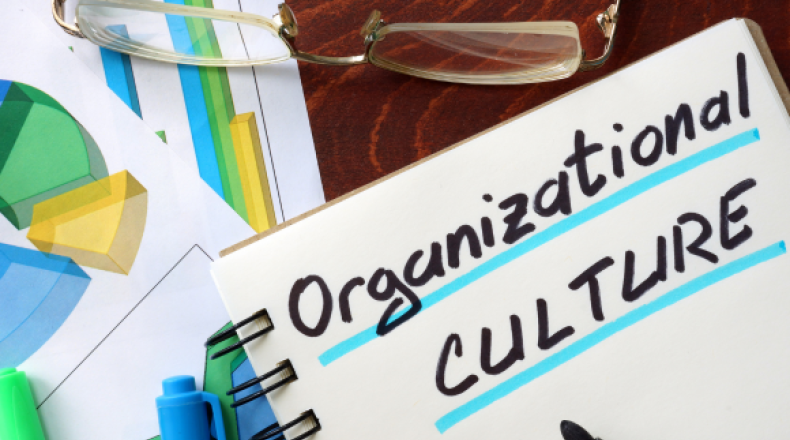
Building Fundraising Culture as Core Organizational Capacity

A fundraising culture is not installed through a campaign or an annual plan. It is built, or weakened, every day through how an organization talks, decides, and relates to the sustainability of its mission.
Across the social sector, most organizations invest significant energy in acquiring new donors, identifying new funding sources, and testing new fundraising strategies. Far less attention is paid to understanding why supporters who were once engaged gradually drift away. That loss is often labeled a stewardship problem. In practice, the breakdown usually starts much earlier.
It begins when resource mobilization is not cultivated internally — when organizations operate in silos and responsibility is delegated to a single function, if it exists at all, or concentrated in executive leadership. The overload placed on the fundraising function produces the opposite of what is intended: sustainability does not become an organizational priority; it becomes an operational urgency. The typical response is acceleration — more events, more campaigns, more experiments with new channels. But the underlying culture remains unchanged.
The sector has invested heavily in fundraising techniques, tools, and tactics. Trainings, campaigns, and acquisition formats continue to multiply. Much less investment goes into developing the organizational culture that sustains those efforts over time. The result is often unstable performance: revenue spikes followed by retention declines and staff exhaustion.
Low donor retention, continuous acquisition pressure, and dependence on individual “heroes” are not only technical problems. They are also cultural signals. In many organizations, the dominant objective is closing the annual budget gap. There is little perceived space to deepen existing relationships, strengthen what has already been built, or test more relational and sustainable approaches.
This pattern is visible internally. Team meetings understandably prioritize program delivery, while fundraising appears as a report: what was achieved, what is missing, and what gap remains. It becomes informational and departmental rather than strategic and shared. Resource mobilization is treated as the responsibility of one unit instead of an institutional capability.
What Leaders Are Seeing Inside Their Organizations
Across organizations of different sizes and levels of maturity, similar patterns tend to emerge, although they may take different forms depending on context. Many leaders recognize a gap between how their culture operates today and what it needs to become in order to sustain resource mobilization over time.
Today, organizations often describe their culture as:
- Working in silos, with limited coordination across teams
- Responding to urgency rather than advancing strategic priorities
- Concentrating fundraising responsibility in one or two individuals
- Relying heavily on isolated events or short-term initiatives
- Operating reactively, driven by immediate needs rather than long-term planning
- Experiencing internal fragmentation, with limited shared ownership of sustainability
At the same time, there is a clear sense of what needs to evolve:
- Breaking silos to build integration across functions
- Shifting from urgency to strategy
- Expanding responsibility so that resource mobilization becomes a shared effort
- Moving from isolated activities to diversified and sustained strategies
- Creating conditions for long-term relationships internally and externally
- Strengthening alignment, communication, and a shared culture of sustainability
This gap is not only operational. It is cultural. And it is where most fundraising efforts either strengthen or quietly erode over time.
When fundraising is not integrated with programs, operations, and leadership, a consistent relational culture cannot develop. Donors are not retained because they are not meaningfully cultivated. And external cultivation becomes difficult when internal alignment, shared language, and shared ownership of sustainability are missing. The function remains at the operational surface, unable to address root causes.
The issue is usually not that organizations don’t know how to ask. The issue is that many try to sustain fundraising as a function instead of building it as an organizational capacity.
Fundraising as Organizational DNA
Understanding fundraising as part of an organization’s DNA means treating sustainability as shared responsibility rather than a delegated task. It does not depend on a single department or exceptional individuals. It shows up in everyday practices, language, and behaviors across the institution.
In this model, as many people mobilize resources as there are people in the organization — not because everyone asks for money, but because everyone contributes to building trust, relationships, and legitimacy.
This cultural shift rests on several interdependent principles:
- Shared responsibility: Sustainability is not owned by the development office alone; it is a dimension of mission delivery. Every role influences the level of institutional trust that makes resource mobilization possible.
- Mission alignment: There is no sustainable mission without resource mobilization. Fundraising is not separate from impact; it is part of how impact becomes viable.
- Involvement before donation: People engage before they give. Financial support is usually the result of connection, meaning, and belonging, not the starting point.
- Long-term relationships: The focus shifts from closing gifts to accompanying relationships. Recurrence cannot be forced; it must be cultivated over time.
- Donors as purpose partners: Donors are not treated as funding sources, but as partners investing in change. This shift reshapes how organizations design experiences and build relationships.
Culture is not declared. It is built piece by piece, through repeated daily behavior.
Culture Is Transmitted Through Roles
A fundraising culture becomes visible through everyday roles and behaviors. It does not depend on a specific department, but on how each function understands its contribution to sustainability and supporter relationships.
Executive leadership plays a central role. When leaders do not speak about donors and allies, the organization does not treat them as a priority. The executive director is not the sole asker, but the one who activates the system. Sustainability becomes part of strategy, not only a financial concern. Leadership shifts from being a lone driver to becoming a model of behavior.
Boards are also part of this cultural system. Their role is not primarily operational, but relational: contributing according to capacity, acting as connectors, sharing personal motivation, legitimizing the cause, and opening doors.
Program teams are not only implementers. They are sources of evidence, experience, and stories. When they generate visible impact and translate results into narrative, they strengthen the trust base that makes fundraising possible.
Communications turns impact into narrative, and narrative into community. Finance translates transparency into credibility. Volunteers expand networks and reinforce legitimacy. Each function contributes differently, but all influence institutional trust.
Within this model, the fundraiser’s role evolves from primary solicitor to ecosystem architect: someone who helps design engagement pathways, strengthens internal culture, and enables others to participate in resource mobilization.
Cultural Barriers and the Fear Factor
If resource mobilization is a cultural capacity, its barriers are cultural as well. Most obstacles to sustainable fundraising are not technical, but internal.
At the organizational level, recurring patterns include leadership that underprioritizes relational cultivation, chronic operational overload, a narrow understanding of fundraising as asking for money, and persistent silos between teams. Sustainability is often displaced by urgency.
At the individual level, resistance appears in familiar ways: “that’s not my role,” “I don’t know how,” “I don’t want to be rejected.” These are not technical objections; they are signals of relational discomfort.
In many cases, the underlying barrier is not lack of skill, but the presence of fear — fear of rejection, of not meeting expectations, or of damaging relationships by discussing money. Saturation also plays a role: the sense that there is no capacity to take on anything more.
Pressure rarely resolves these fears. Culture usually does. Shared language, internal alignment, and the recognition of small relational wins can gradually reduce fear by distributing responsibility.
Where This Shift Begins
A culture of resource mobilization is not installed by launching a campaign. It is built by leading organizational change.
There is no single formula. Each organization starts from a different history, structure, and level of maturity. But the shift often begins in similar ways: making current patterns visible, naming the desired culture, building shared language, and gradually expanding ownership of sustainability across roles.
This is not an event. It is a process.
When organizations begin to treat fundraising as an organizational capacity rather than a specialized function, something important changes. Conversations become more open. Roles expand. Relationships deepen. Sustainability stops being a recurring emergency and becomes a shared design principle.
This shift does more than improve fundraising results. It strengthens partnerships, builds more resilient institutions, and enables more honest relationships with supporters.
Fundraising culture is not a communications strategy or a development plan. It is the way an organization aligns its mission with the conditions that make that mission sustainable.
Sustainability does not depend on a function.
It depends on a culture.
 Guillermina Lazzaro is Academic Coordinator of the Executive Program in Fundraising at the Center for Social Innovation at Universidad de San Andrés and Director of Projects, where she supports organizational strengthening across the social sector. She advises nonprofit organizations and works with Ronald McDonald House Global to support 14 Chapters across Latin America and the Caribbean on fundraising, collaboration, and organizational excellence.

Read More