AFP Member Spotlight: Christy Hunt




AFP Member Spotlights are a recurring series of interviews with AFP members, highlighting the unique individuals and career paths that exist within the fundraising profession. If you know an inspiring fundraising professional who deserves to be featured, please email [email protected].
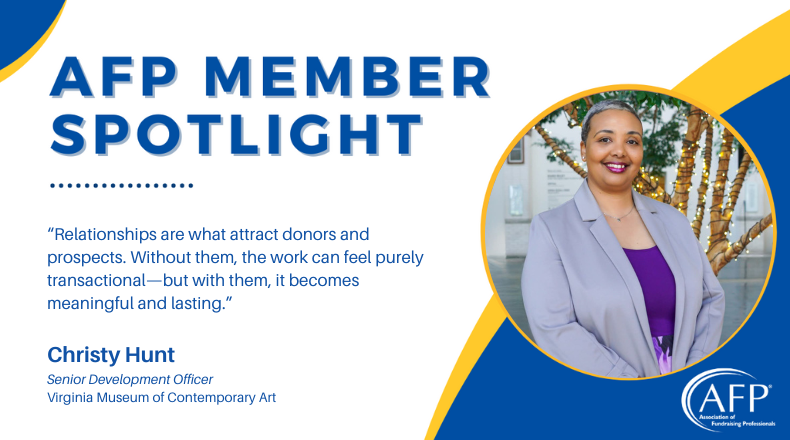
In this member spotlight, we interviewed Christy Hunt, senior development officer at the Virginia Museum of Contemporary Art. She shares how she successfully transitioned from a career in banking to the world of fundraising, and why she believes listening to donors is the key to building authentic, lasting relationships that inspire giving.
Q: How did you start your career in the fundraising profession and what led you there?
A: My journey into fundraising happened almost by accident. While working in the banking industry, I volunteered with the YWCA of South Hampton Roads, where I became interested in joining a giving circle. When we moved back to Hampton Roads in 2024, I knew I wanted to continue giving back and getting involved in the community, which ultimately led me further into the world of fundraising. Before that, I had been working in banking and had a background in sales. I quickly discovered that many of the skills I used in the financial world, especially building relationships and truly listening to clients, translated seamlessly into development. In both fields, success comes from understanding what a donor or client values and tailoring the relationship to meet those interests.
In July of this year, I transitioned to my current role at the Virginia Museum of Contemporary Art. Virgina MOCA has offered me an opportunity to raise funds for something that I am deeply passionate about, in this case the arts. This move has also given me a chance to expand my fundraising skill set. For example, the museum offers memberships, so in addition to my corporate and major gift goals, I can also engage prospects in conversations about our different membership levels. This means listening closely to discover what aspect of the museum excites them—whether it’s education, events, or exhibitions—and finding ways to connect their interests with what the museum offers.
Q: When and why did you decide to become an AFP member?
A: I started my career in development in October 2024 and became an AFP member the following month. From my previous career in banking, I understood how valuable it was to join a professional association, especially when you are new to a field and are looking for continuing education. As soon as I realized I was going to stay in development, I began looking for a fundraising association. I was invited to National Philanthropy Day with the AFP VA, Hampton Roads Chapter, and that experience encouraged me to get involved and join AFP.
Q: How has being an AFP member benefited you in your career?
A: I’ve met so many new people since joining AFP. Through the Hampton Roads Chapter, I’ve gotten involved with a group called Fresh Fundraisers. It’s a safe space for people like me, who have been in the profession less than three years, to meet with one another on the last Friday of every month to share challenges and opportunities and exchange best practices.
Q: Are you doing anything innovative at your organization (or a past organization) that you think other fundraisers could benefit from?
A: I draw a lot from my past career experience. I reach out to former community partners and contacts from the banking world to let them know about my work with the Virginia Museum of Contemporary Art. I also connect with my own circle, because the people closest to us can be strong supporters if we let them know what we are doing.
Another approach I use, which I wish more people would try, is sharing on social media. I make sure that I am active on all platforms, sharing the museum’s events and connecting with potential donors. Coming from a sales background, I’m used to reaching out to people to ask for a meeting through social media platforms like LinkedIn. This often surprises other fundraisers who are hesitant to initiate contact online, but my past experience has made me confident and comfortable using social media as a direct outreach tool.
Q: What is your favorite word? (only one word) How has this word influenced or inspired your career?
A: Relationship. This word has been central to every stage of my career, from banking to my current role in fundraising. Strong relationships last over time, and no matter what industry you’re in, if I build a genuine connection with you and stay in touch, we can support each other’s work. Relationships are what attract donors and prospects. Without them, the work can feel purely transactional—but with them, it becomes meaningful and lasting.
Q: What professional accomplishment are you most proud of?
A: Two recent professional accomplishments stand out for me. The first is completing the Nonprofit Leadership Center Management Essentials Certificate through the Northwestern Kellogg School. As someone new to the profession, I wanted to take a course that would give me a strong foundation in how nonprofits operate. The second is successfully transferring my skills from the financial sector into fundraising and making a confident career pivot.
Q: In your opinion, what is the biggest challenge facing the nonprofit fundraising profession today?
A: With the recent cuts to federal funding, I think a big challenge is now relying on the community to fill these gaps. We have to take the time to build relationships, which means having meetings where you listen and learn about the donor, not just meetings where your goal is to make an ask.
Q: What advice do you have for other fundraising professionals?
A: Listen, and don’t be afraid to ask. Many donors and prospective donors are simply waiting for the invitation to get involved, but before you ask, you have to listen and build a relationship so you understand what matters to them. You’ll sense whether a meeting is the right time to make an ask or invite them to an event, or if more follow-up is needed. Not asking can mean leaving support and funding on the table.
Another piece of advice is to never underestimate the skills you have developed in past roles. I transitioned into fundraising after 18 years in banking, and I never imagined making such a significant career shift. At first, I did not think I had the experience to succeed, but I soon realized that the skills I had built in my previous work, even without a development title, prepared me to thrive in this field.

Read More