Unmasking Burnout: Why Neurodiversity Belongs in Fundraising’s Mental Health Conversation

This past May, during Mental Health Awareness Month, I read a thoughtful AFP Global piece on mental health in the nonprofit sector. A few years ago, I would have applauded the growing openness of these conversations. But this time, one question kept tugging at me: Why aren’t we talking about the intersection of mental health and neurodiversity?
An estimated 15 percent of people are neurodivergent, and late diagnoses—particularly among women and people of color—are increasingly common. Yet this reality is often missing from our sector’s conversations on burnout, retention, and workplace culture.
I know this firsthand. I was 37, with two young children, when I received my ADHD diagnosis. At first, I didn’t unmask. I had just accepted a new leadership role, and while I knew I was struggling, I thought I could hide my challenges and conform. But the systems I had built to keep up were crumbling, and masking only fueled anxiety, burnout, and self-doubt. It took nearly a year before I fully disclosed my diagnosis to my boss, and almost another year before I decided to fully disclose to all of my colleagues, but most importantly, to our development associate. For me, it was a step towards returning back to who I knew I was authentically as a leader, a supervisor, a colleague, and in general, a person, allowing me to stop pretending to be someone I wasn’t. At the end of the day, I felt it was important to lead by example and that I had a responsibility as a part of senior leadership, and a DEI-forward organization to take the first step and perhaps create a space for others to recognize that their differences were ok, that we should be talking about mental health and more.
That unmasking journey opened my eyes—not just to my own needs, but to the glaring absence of neurodiversity in our sector’s conversations. When I pitched a session on neurodiversity for AFP ICON 2025, I was still navigating my own acceptance. The overwhelming response confirmed that our sector is eager to discuss mental health and inclusion, but neurodiversity remains an overlooked piece of the puzzle.
The Hidden Crisis: How Masking Drives Burnout
Frustrated by this gap, I connected with neurodivergent fundraisers across the U.S. and globally. I wanted diverse voices because I recognize my experience isn’t universal. What I heard was both heartbreaking and telling: fundraisers describing masking as a survival strategy that inevitably leads to burnout.
One fundraiser shared how she expressed to her supervisor that she couldn’t focus in an open-concept workspace, only to be told the solution was to come to work on Saturday when it was quieter. Another disclosed her late ADHD diagnosis openly but keeps her autism diagnosis hidden, fearing that the current stigma would derail her career. She’s celebrated for big ideas and passion, but punished for needing clarity and flexibility.
These stories reveal a troubling pattern: our sector attracts creative problem-solvers, but our systems often stifle their strengths. On my flight to Seattle for AFP ICON, I sat next to a fellow fundraiser who, upon learning about my presentation topic, disclosed his own neurodivergence. Like me, he believed there are far more neurodivergent fundraisers out there than we realize. Neurodiversity often includes high justice sensitivity—a trait that likely draws many to this mission-driven work.
The Cost of Exclusion: When Sector Norms Harm
We talk extensively about burnout, high turnover, and mental health strain in fundraising. But we rarely ask: how many of us are neurodivergent—and how might our workplaces be pushing us out?
Nonprofit norms—constant multitasking, unwritten social rules, urgent deadlines—can feel like an obstacle course without a map for neurodivergent staff. Many fundraisers I interviewed described masking for survival, only to burn out completely. One fundraiser explained seeing their neurodivergence as a disability only because societal structures make it so, highlighting how the barriers we construct push talent away.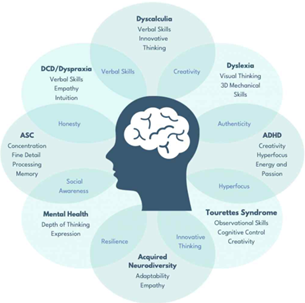 When talented fundraisers burn out due to masking, organizations lose institutional knowledge, donor relationships, and face costly recruitment cycles. But the cost goes beyond turnover—we’re actively underinvesting in the strengths neurodivergent professionals bring to our work.
Neurodivergent fundraisers often excel at pattern recognition, creative problem-solving, intense focus, and thinking outside conventional frameworks. At a time when the nonprofit sector needs agility to navigate economic uncertainty, shifting donor expectations, and evolving technology, these cognitive differences represent untapped competitive advantages. Instead of harnessing these strengths, we’re forcing square pegs into round holes, then wondering why our retention and innovation suffer.
Even DEI-forward organizations often leave neurodiversity out of the conversation, missing both a critical retention strategy and an opportunity to unlock diverse thinking styles that could revolutionize how we approach fundraising challenges.
Masking disconnects us from who we are, fueling anxiety, depression, and burnout. Interviewees described everything from overcompensating with excessive donor notes to being penalized for disclosing diagnoses. Many juggle intersecting identities—as parents, caregivers, religious minorities, or trauma survivors—making unmasking feel especially vulnerable.
The Solution: Neuroinclusion as Competitive Advantage
Neuroinclusion isn’t about lowering standards—it’s about recognizing different forms of brilliance and redefining professionalism. Recent Deloitte research shows that neuro-inclusive organizations are 75% more productive. When we create environments that respect different ways of working, we unlock innovation and reduce burnout for everyone.
Inclusive leaders ask simple but powerful questions: How do you work best? What supports help you thrive? They build teams around strengths and create space for authenticity. AI tools can support neurodiverse staff by automating note-taking and streamlining routine tasks, enabling them to focus on relationship-building and strategic thinking.
This approach benefits all staff. Neuroinclusive practices like clear communication, flexible schedules, and strength-based assignments create better workplaces for everyone.
A Call to Action: Concrete Steps Forward
If we want to retain talent and truly address burnout, we must integrate neurodiversity into our mental health and inclusion strategies. This means recognizing masking as a driver of burnout and taking concrete steps:
For Leaders:
- Implement “accommodation conversations” during onboarding for all staff
- Audit workplace norms and job descriptions for unnecessary neurotypical assumptions
- Provide neurodiversity training for managers and HR staff
- Create neurodiversity employee resource groups
For Organizations:
- Build flexibility into core systems—hybrid work, asynchronous communication, varied meeting formats
- Establish multiple pathways for career advancement that don’t rely solely on traditional presentation skills
- Include neurodiversity explicitly in DEI initiatives and mental health programming
For the Sector:
- Integrate neurodiversity into fundraising education and professional development
- Share success stories of neuro-inclusive practices
- Research the intersection of neurodiversity and fundraising effectiveness
My journey with neurodiversity is new, but my passion for inclusion is not. By sharing my story and amplifying voices from fundraisers globally, I hope to spark more conversations. Together, by bringing neurodiversity into the conversation, we can build a sector where all fundraisers can bring their authentic selves to their work and missions, creating stronger teams, better outcomes, and more sustainable careers for everyone.
Today I’ve focused on neurodiversity among our staff, but the conversation doesn’t end there. Neurodiversity among the donors and communities we engage is equally important—and that’s a conversation for another day.
If you are interested in this conversation or discussing your own lived or shared experience, I welcome outreach by LinkedIn.
Additional Resources on Neurodiversity in the Workplace
- Comprehensive_Guide_To_Making_Your_Organization_Neuroinclusive.pdf - Google Drive, Prepared by Lindsey Mackereth, MA, LPCC, LADC
- Thompson, E. and Miller, J. (2024). Neuroinclusion at work. Survey report. London: Chartered Institute of Personnel and Development
- Leading the Neuroinclusion Revolution at Work, Forbes Article Written by Julie Kratz
- Is There a Link Between Neurodiversity and Mental Health? | Psychology Today United Kingdom
- Neurodivergence and mental health—Recognising what needs championing and challenging | PLOS Mental Health
- Book: Divergent Mind, Thriving in a World That wasn’t Designed for you, Jenara Nerenberg
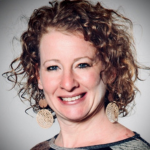 Nicole Bela, MSW, CFRE is the director of development at Advance Illinois, a bipartisan education policy and advocacy organization dedicated to ensuring equitable access to quality education in Illinois throughout the education continuum. She holds a BA in Psychology from Michigan State University and an MSW from Washington University in St. Louis, focused on social and economic development and nonprofit management. With over a decade of fundraising experience in the nonprofit sector, Nicole enjoys helping development departments drive growth through best practices and data-driven decisions. A lifelong learner, Nicole obtained her CFRE certification in 2022.

Read More