Meaningful Risk: Navigating Vulnerability and Transparency in Fundraising

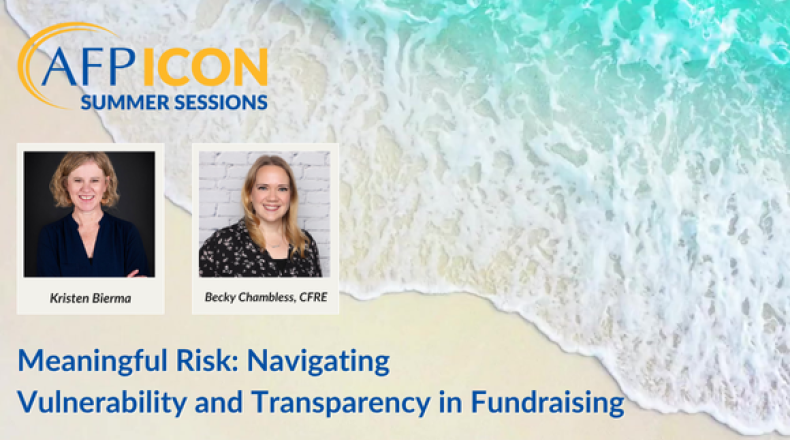
Becky Chambless, CFRE, development director for the Alaska Wildlife Conservation Center, and Kristen Bierma, executive director of Beacon Hill, are going to be presenting a session called Meaningful Risk, Navigating Vulnerability and Transparency in Fundraising, as part of AFP ICON Summer Sessions, taking place virtually, August 13.
We asked Becky and Kristen to share a little bit about their topic, to give attendees a preview of what they can learn by joining them. Here’s what they had to say:
Q: Why focus on vulnerability and transparency?
Kristen: When we hear the word “vulnerability,” we often associate it with fear, uncertainty, and risk—something to avoid. But research, including the work of Brené Brown, shows that vulnerability can actually lead to deeper trust, stronger relationships, and meaningful growth. So, in our session, we'll have a conversation about the importance of vulnerability in fundraising and how it relates to things like authentic storytelling, how to tell the story well, how to tell the truth well, and of course how to do that in the context of ethics.
Q: Some fundraisers may be hesitant to get vulnerable with donors because they don’t want to come off as unprofessional. How do fundraisers find that balance, and how does ethics play into that?
Becky: I actually believe vulnerability is professional—when it’s done with intention. It’s about being authentic and real in a way that builds trust without crossing boundaries or losing credibility. We have to be real, not raw, and share enough to inspire and connect, but not overshare, which can sometimes be a hard line to walk. Ethics are key here. Vulnerability should never be used to manipulate; it should always point back to impact and the donor’s role in making that possible. Donors appreciate honesty, and I see vulnerability as an extension of that honesty. If we approach it with clear ethical boundaries, it can be a big opportunity.
Q: The phrase “meaningful risk” is part of your session title. What happens when vulnerability goes wrong?
Kristen: Vulnerability is a risk, and yes, there are definitely ways it can backfire. We’ll share some real-world examples of when that’s happened. For instance, if we’re not thoughtful in how we tell stories, we can end up exploiting the very people we aim to champion. At my organization, we serve children in foster care, and that means walking a fine line—telling stories that inspire support without compromising anyone’s dignity or privacy. In the session, we’ll talk about the kinds of guardrails fundraisers need in place to ensure our storytelling uplifts rather than exploits.
Q: Transparency is another big theme of your session. While it’s generally viewed as a good thing in fundraising, does it carry risks too?
Becky: Absolutely. There’s always some level of risk in being transparent. But our donors deserve honesty about how their gifts are being used and what’s happening within our organizations. Transparency is what builds trust. That said, too much detail—or the wrong kind—can cause harm. We need to avoid disclosing confidential information or compromising someone’s privacy. Ethical transparency requires discernment. If we can be honest while protecting people and telling the truth responsibly, it brings clarity and strengthens donor relationships.
In our session, we’ll walk through four real-life examples, drawn from our own experiences or those of close colleagues, spanning small shops and larger organizations. Whether you're new to fundraising or have been in the field for years, we think this conversation will offer insights and tools to navigate these nuanced, but essential, topics.
To learn more about what Becky and Kristen shared, make sure you register for AFP ICON Summer Sessions, taking place virtually August 13.

Read More