Building a Resilient Fundraising Strategy for 2026: What Diversification Really Looks Like

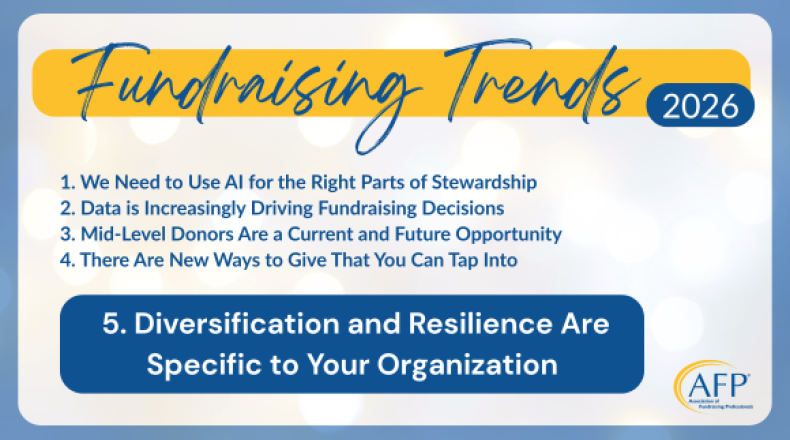


This article is part of a five-part series: 5 Fundraising Trends for 2026
After the funding uncertainties of 2025, diversification and resiliency are undoubtedly going to be two of the biggest buzzwords of 2026. The cuts to federal funding have made organizations nervous about overreliance on any one source of income, and the threat of further economic volatility has inspired greater interest in building up long-term reserves.
As your nonprofit looks at how to diversify your funding and plan for the future, start with your data. Knowing your opportunities for growth starts with knowing where your current funds are coming from. If you are in a stable place where you’re meeting your budget and have some reserves, starting an endowment as a form of long-term, sustainable income may be the right fit for your organization.
Deciding whether your organization should start an endowment is often based on two important factors: do you have the excess funds beyond what is needed to meet operational expenses, and do you have a long-term vision for your organization? Just as with legacy giving, donors who give to an endowment are doing so because they have confidence in your organization’s enduring impact. Knowing the purpose of the endowment and being able to articulate this to donors is essential for the endowment’s success. Similarly, your board of directors and organizational leaders need to buy into the value of starting an endowment and be in alignment about the goals, particularly if you are counting on your board to be some of the endowment’s first financial contributors.
If your organization is not in a place where starting an endowment is an option, and you’re looking more for immediate gains, other sources of funding to pursue may include foundation grants, corporate sponsorships, membership models, or mission-aligned earned income through the selling of goods.
Alternatively, another popular source of sustainable income is a monthly giving program. Particuarly for younger donors who may get sticker shock from giving as one lump sum, monthly giving programs offer a subscription-esque model that is familiar and convenient. To see if this is feasible for your organization, take a look at the number of donors who are giving repeat gifts, as they will be the primary targets for intitial marketing of this type of program. If you do offer monthly giving, make sure this is clearly visible as an option during the checkout process. You want donors to know that they can give this way, and you want donors who do opt in to monthly giving to be aware that they are signing up for a monthly gift so you don't end up with cancellations later. Additionally, as with any donor category, ensure that you have a stewardship plan in place. Many organizations will send receipts monthly with every gift and one combined receipt at tax time. If you have the capability to customize these, this is an excellent opportunity to demonstrate the donor's continued impact. If you can't augment the receipts, developing a newsletter or some other system of touchpoints will help keep these donors engaged.
For other nonprofits, diversification may start not with a new revenue source or program, but within your current donor base. Individual donors are the largest source of funding for most organizations. Focusing your efforts on securing more small-dollar donors, younger donors, or donors from underrepresented backgrounds could also be considered diversification. Determining where there could be opportunities for growth starts with digging into your donor data. Is your donor base representative of the community that you serve? AI is an excellent resource for prospecting, but are there potential supporters who are being overlooked due to algorithmic bias? Donors are unlikely to give if they are not asked. They are also unlikely to give if the outreach they receive is not culturally relevant or seems opportunistic and disingenuous. This may require doing some work internally at your organization first, but it will be well worth it in the long run.
Ultimately, how your organization chooses to prepare itself for the uncertainties of the year ahead will be unique to you, just remember not to sacrifice what is currently working in pursuit of diversification, because there are plenty of ways to build resiliency by capitalizing on what you do best.
AFP Resources That Can Help:
- Article: Many Ways to Give: The Importance of Diversified Nonprofit Funding
- On-Demand Webinar: Fundraising in Uncertain Times: How to Be Proactive to Secure Your Funding
- Advancing Philanthropy Article: Diversifying Your Donor Base (Available Exclusively to AFP Members)
Author Information


Read More