How Donors Are Giving Now: New Channels Your Nonprofit Should Embrace in 2026

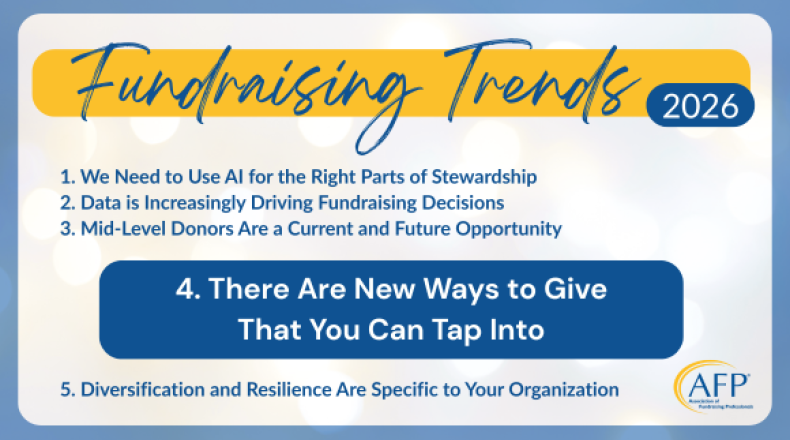


This article is part of a five-part series: 5 Fundraising Trends for 2026
In December's episode of the AFP podcast, AFP President and CEO Art Taylor cited his work with the Generosity Commission, highlighting that the percentage of U.S. households giving to charity has fallen from 65% in 2008, to around 41% today.
Some of this may be attributed to a genuine drop in generosity, but it also reflects the changing nature of how people choose to give. Many are choosing to bypass what they see as the middleman, to give directly to members of their community. If nonprofits want to engage with these donors, they will need to embrace models of giving that provide that sense of connection.
One way to do this is through giving circles, which allow people to come together and pool their resources to make a more significant impact on behalf of a cause they care about. These groups get to discuss their priorities and determine how their funds will be used, which gives them a sense of ownership and often leads to engagement beyond donation, such as volunteering or board service. They are also a great way for underrepresented voices to play a larger role in philanthropy. Many circles, such as the HERitage Giving Fund and the Latino Giving Circle Network® were established specifically to help donors with specific identities find one another and unite for collective action. Check out Philanthropy Together’s directory of giving circles to find circles relevant to your cause and take a look at St. Jude’s website for an example of how to incorporate language about giving circles onto your ways to give pages.
Another way to involve your nonprofit in community giving is by offering peer-to-peer options directly through your organization. The challenge with many peer-to-peer platforms is that your organization receives the funds, but not any of the information about who donated, leaving you unable to reach out to those donors for future support. Many CRMs and fundraising software vendors now offer peer-to-peer options for your website, you’ll just need to set it up and ensure that your supporters are aware that they can go through you directly for their birthday fundraisers, etc. (and of course, develop a stewardship plan for these donors after they’ve engaged).
Beyond these community-centered giving approaches, nonprofits should also be leaning into some of the newer financial technologies that established donors are now using, particularly as tax changes from the One Big Beautiful Bill go into effect this year making these channels even more valuable. For seniors, ensuring that your website makes it easy to accept qualified charitable distributions (QCDs) from IRAs, and having conversations with donors about this tax advantageous option, is essential. You also want to make sure your website is equipped to either accept donor-advised fund (DAF) donations through placement of a widget, or at the very least, make sure your site contains information about how to donate through a DAF. According to the 2025 Annual DAF Report produced by the Donor Advised Fund Research Collaborative (DAFRC), the total number of DAF accounts reached a record high of 3.56 million in 2024 with total assets of $326.45 billion. With an average payout rate of 25.3%., DAFs are a significant opportunity for nonprofits in 2026.
AFP Resources That Can Help:
- Resources on 2026 tax changes
- Giving Circles Discussion on AFP Connect (Available Exclusively to AFP Members)
- AFP ICON 2026 Session: The Secrets Hiding in Your DAF Data: An Exclusive Look at the DAF Fundraising Report (Register for AFP ICON)
Author Information


Read More