Beyond ChatGPT: How Fundraisers Can Use AI to Build Real Donor Relationships in 2026

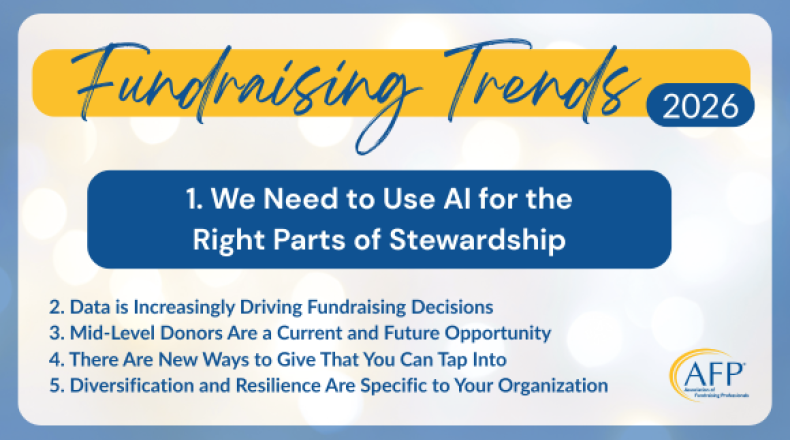


This article is part of a five-part series: 5 Fundraising Trends for 2026
If you’ve been paying attention to the Fundraising Effectiveness Project reports for the last few years, you’re probably all too familiar with the persistent trend of declining donor retention that has been plaguing nonprofits since the pandemic.
Though the industry has recognized this as a problem, with limited capacity, resource-strained development teams have understandably prioritized building and maintaining relationships with major donors whose giving has remained relatively consistent, making this overreliance on large gifts and shrinking donor pool something of a self-fulfilling prophecy.
Finally, however, according to the Q3 2025 Fundraising Effectiveness Project report released in December, we may be starting to see this change. The rate of decline in donor retention is beginning to level out, but if we want to see this trend continue, and actually see increases in donor retention, we need to focus not just on stewardship, but on personalized, human-centered relationship development.
With generative AI tools such as ChatGPT and Claude now widely accessible, many fundraisers are outsourcing time-consuming tasks, such as drafting campaign messaging, to this technology. While this has undeniable schedule-freeing benefits, as more and more nonprofits adopt this practice, it is worth considering the collective negative consequences. If you’re feeling like your communications are not cutting through the noise and inspiring your donors to action, it may be because your message sounds like every other AI-promoted appeal crowding their inbox. Now that everyone is using it, it’s all starting to sound the same.
As we move into 2026, nonprofits need to look beyond generative AI to explore how AI can be used to segment and personalize (and personalize beyond just filling in a name field, because in 2026 that is not personalization). Are you referencing the last gift the donor made? Are you demonstrating the impact of that gift on the specific program that they’re passionate about supporting?
Frequent and targeted non-solicitation touchpoints that build connection are essential. AI should be our partner in this, helping us identify our audiences, pull the pieces together, and fill in the blanks; it can even help us draft the initial message outlines or templates. But stewardship messaging that is going to stand out in 2026 is creative copy that prioritizes human connection and leaves the donor feeling like they’ve built a relationship with you and your mission, not a machine.
AFP Resources That Can Help:
- On-Demand Webinar: Powering Audience-First Fundraising and Philanthropy with AI
- Advancing Philanthropy Article: Engagement Versus Stewardship—A Back-to-Basics Refresher (Available Exclusively to AFP Members)
- Podcast: Where AI Fits in FundrAIsing: Practical Uses and Ethical Concerns

Read More