From Silos to Synergy: Loyalty Is a Shared Outcome


How a cross-functional loyalty index reveals the collective impact of donor experiences—and helps teams work together to drive deeper commitment.
Donor Loyalty Is Everyone’s Business
Too often in advancement, we assume loyalty is a byproduct of fundraising alone. But the truth is, loyalty—the kind that leads to recurring gifts, increased support, and advocacy—is built from the full spectrum of a donor’s experience.
Donors don’t think in departments. They remember how we made them feel. They notice if we follow up. They remember that email, that event, that voice on the phone.
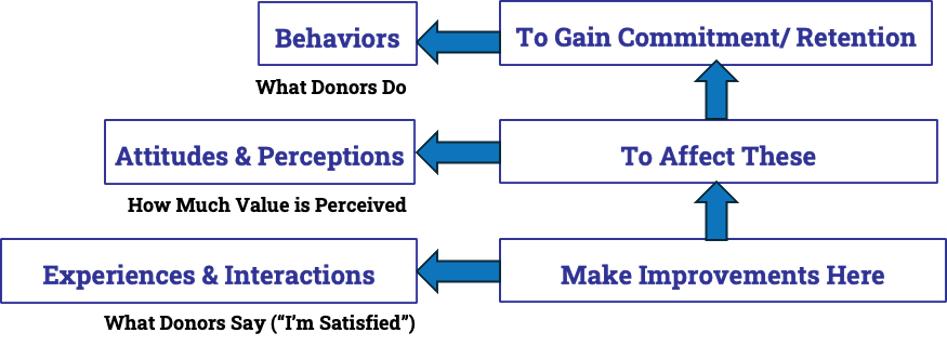
During my time at the University of Iowa Center for Advancement (UICA), I recognized a recurring challenge: teams were doing great work, but often in isolation. Donor experiences were being shaped across departments—development, stewardship, communications, alumni relations—but we lacked a shared framework to understand their collective impact. That realization led me to design and implement a loyalty and satisfaction study—a cross-functional eKort that resulted in a measurable loyalty index. This index quantifies how experiences and interactions shape attitudes and perceptions, which in turn drive key loyalty behaviors.
Every Touchpoint Matters
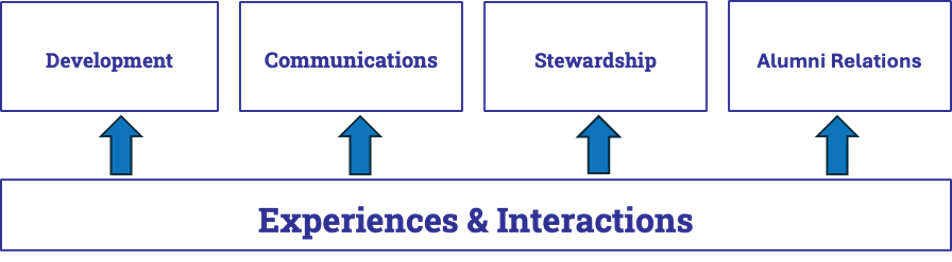
Loyalty doesn’t begin at the point of giving—it begins the moment someone engages with your organization. Whether it's a meeting with a gift officer, an email update, a thank-you call, or an alumni event, each interaction contributes to a donor’s overall experience. This graphic shows how four key functions—development, communications, stewardship, and alumni relations—collectively shape the experiences and interactions that form the foundation of donor perceptions.
Too often, we evaluate these departments separately. But to the donor, they are all part of one relationship. When we align these efforts intentionally, we begin to shift from siloed execution to collaborative experience design—the first step in building lasting loyalty.
How Donors Feel Drives What Donors Do
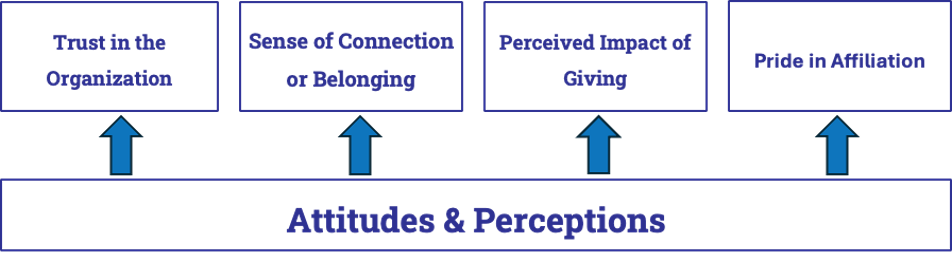
While experiences are the starting point, it's how those experiences make a donor feel that truly shapes behavior. Our loyalty index identified four key attitudes and perceptions that most strongly influence whether someone gives again, gives more, or recommends your organization to others.
These four psychological drivers form the “middle layer” of our framework—and they’re deeply shaped by every interaction a donor has with your organization:
- Trust in the organization
- Sense of connection or belonging
- Perceived impact of giving
- Pride in affiliation
When these perceptions are strong, donors are more likely to act in ways that signal loyalty. When they’re weak or uncertain, even a strong fundraising appeal may fall flat.
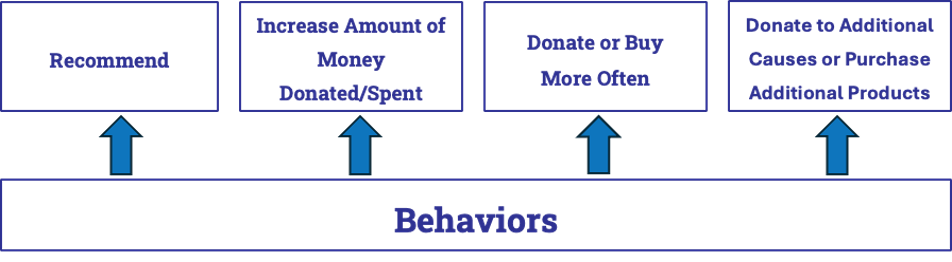
When trust is strong, connection is real, and impact is felt—loyalty behaviors follow. Donors who feel valued and aligned with your mission are more likely to take meaningful actions that benefit your organization in lasting ways. These are the outcomes we aim to influence—not just dollars in the door today, but sustainable, relationship-driven behaviors over time.
Our loyalty index focused on four specific behaviors that represent loyalty in action:
- Recommend the organization to others
- Increase the amount donated
- Donate more frequently
- Give to additional causes or designations
Each of these is an outcome worth measuring—and each one stems from a deeper, emotional connection built over time through aligned experiences across departments.
From Insight to Alignment: Loyalty Is a Shared Outcome
The biggest lesson our loyalty index revealed? No one department owns loyalty. Every team—whether stewarding donors, writing copy, managing events, or sending emails—plays a role in shaping the perceptions that drive behavior.
We often think of development as the engine of donor commitment. But the truth is, development is just one part of the machine. The full donor experience is co-authored by everyone across the advancement enterprise.
By surveying donor sentiment and linking it to actual behaviors—like giving again or recommending the organization—we were able to generate a simple, trackable score that reflected a donor’s likelihood to stay engaged over time. That score helped us move from anecdotal feedback to measurable alignment.
The key wasn’t just asking donors how they felt—it was identifying which sentiments most reliably predicted loyalty, and helping teams focus their energy accordingly.
When we begin to measure that collective influence—and align teams around improving it—we move from good intentions to lasting impact.
Takeaways for Your Team
If you’re considering applying this approach at your own organization, here are three practical steps:
- Start with a donor survey: Go beyond “satisfaction.” Ask about trust, belonging, impact, and pride—then link those perceptions to actual behaviors.
- Create a cross-functional scorecard: Use the loyalty index to highlight where experiences are strong—and where they’re falling short. Make it a shared KPI, not just a development metric.
- Align around shared outcomes: Bring teams together regularly to review loyalty data. Ask: How are we, together, shaping the donor journey?
Closing Thought
The goal isn’t to track more data—it’s to build more loyalty. And that starts by seeing the donor relationship not as a series of transactions, but as an integrated experience powered by people across your organization.
When we move from silos to synergy, we don’t just increase giving—we build lasting commitment.
Brad Cunningham is the founder of Open Horizon Analytics, where he helps missiondriven organizations use data to fundraise smarter and engage more meaningfully—without the complexity of big systems. He brings 25+ years of experience in data science and business intelligence, including four years as Vice President of Constituent Insights and Analytics at the University of Iowa Center for Advancement.
[email protected] | openhorizonanalytics.com
This article reflects work conducted during the author’s tenure at the University of Iowa Center for Advancement.

Read More