From Visitors to Visionaries: Mission Experiences That Transform Relationships

Over twenty years ago, I had the opportunity to live as if I had type 1 diabetes for a week: wearing an insulin pump filled with saline, pricking my finger to test glucose, and counting every carb to calculate the “insulin” dose. It was early in my nonprofit career, and I was a recent college graduate working in a nonprofit organization to connect families whose children were newly diagnosed with Type 1 Diabetes (T1D) with our community of parent volunteers and resources. As time has gone by, the specifics of what I learned about insulin and carbs that week has faded from my memory, but the unforgettable insight into why the work I was doing mattered remains vividly two decades later.
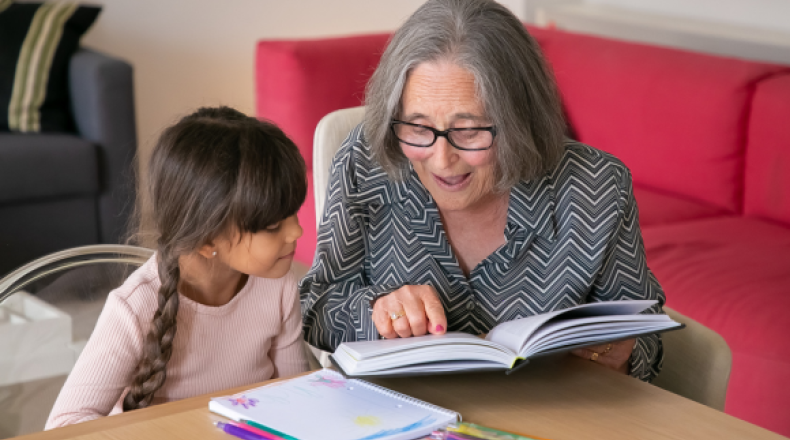
That experience inspired my proposal to build deeper connections to the impact of our mission within the grandparent community in my current role at The Joy School, a K-8 transitional school for students with learning differences in Houston. Listening to both parents and grandparents talk about learning differences and their families, an idea took root to transform our grandparent day from the traditional lunchtime visit into a “day in the life” experience of their favorite student. With the support of the development director, the school’s leadership team agreed, and A Grand Day at Joy! was launched in 2024.
While the energy from grandparents and students on campus that day was absolutely exuberant, as one might expect from somewhere named The Joy School, the results were also undeniable: grandparent giving quadrupled year over year (+400%) and every single grandparent leadership donor was someone who attended the experience. As we prepare to host this “day in the life” experience for the second year, we’ve already begun receiving leadership renewals from grandparents who have been transformed from visitors to visionaries.
There are three things to consider when designing a meaningful firsthand experience of your mission:
1. Look Beyond the Obvious: Identifying Donors on the Periphery
As fundraisers, prioritizing cultivation efforts is both effective and necessary. Often this means we focus on those with the closest ties to our mission and the clearest capacity to give. You’ve heard that old quote, “people will forget what you said but they’ll never forget how you made them feel,” right? This is exactly what happens when organizations invite relationships from the sidelines into the heart of the mission through a meaningful, direct experience.
The success of our grandparent initiative began with this shift. Instead of hearing secondhand about a happier grandchild, a relieved parent, or reading about us in a mailing list communication, we invited grandparents to participate in the school day. They left with sense memories of classroom activities beside their grandchild, the sincerity of the teacher’s expert encouragement, and the belonging their grandchild experiences every day in a class where everyone learns differently. They came away knowing exactly why The Joy School makes a difference — not because they were told, but because they got to live it too.
According to The Chronicle of Philanthropy , between $84 and $124 trillion is expected to pass from baby boomers to younger generations in the coming decades, with about $18 trillion projected to flow to charities. For organizations serving children and families, engaging grandparents and other seniors more intentionally can crystallize your purpose in an unforgettable and transformational way. By devoting thoughtful curation to an experience for grandparents, we discovered an even deeper well of generosity and are stewarding these important partnerships with genuine care.
2. Create Direct Encounters with the Mission
Inviting grandparents into the classroom was more than a change of schedule; it was a change of perspective. For years, our Grandparent Day guests found the lunchtime visit pleasant, but their role remained observational and removed from the everyday magic of our small class sizes and school community culture. This shift from spectator to participant in carrying out our mission has been essential to building deeper connections.
For other organizations, depending on the mission focus, the format will undoubtedly look different. The key is to create encounters that reveal the impact as it truly unfolds for those you serve, not only as it is described in newsletters or appeal letters. A hospital might invite guests to take part in mock treatments, as I did with T1D, or pair them with other program staff focused on improving the patient experience. A performing arts organization could allow guests to shadow staff during a tech rehearsal or to volunteer with their outreach programs to local schools. When donors experience the mission impact firsthand, they carry those moments and memories into their giving decisions.
3. Curate the Experience with Intention
Transformational experiences do not happen by accident. Every element of A Grand Day at Joy! was designed to welcome guests into the school community and for them to feel the impact of our mission, just as their grandchild does. From the moment they arrived on campus, each part of their visit was intended to showcase how this unique school is allowing their grandchild to thrive because they are understood, supported, and celebrated.
The event began with a thoughtfully scripted welcome from our head of school, highlighting the essential role grandparents play in supporting students and their families. Guests were encouraged to view themselves not just as visitors to their grandchild’s school, but as partners in the circle of support for students who learn differently. That framing mattered deeply.
By the time guests left the playground house rally sendoff, they had experienced true belonging to a community built for students with learning differences and inspired astounding generosity.
 Meredith Young brings a national perspective to small shop fundraising, with experience spanning corporate sponsorship, institutional giving, peer-to-peer fundraising, and major gift moves management. Professionally, she has led frontline fundraising and community engagement for major nonprofit organizations and also draws on more than 20 years of personal volunteer leadership, including board service and fundraising events. Meredith is a graduate of the inaugural cohort of the Leadership Institute for Nonprofit Executives at Rice University’s Center for Philanthropy and Leadership and is currently pursuing her CFRE.

Read More